2026 AGM Member and Supporter report.
NPO CATNIP —Member And Supporter Report. What we did in 2025 and have planned for 2026.
NPO CATNIP —Member And Supporter Report
[After AGM 2026-02-28]
Thank you for attending the AGM or sending voting forms or proxy forms. The meeting passed the accounts, and re-elected Nick May, Yoriko Kitagawa and Isabelle Nambu as board members, with Yumi Shigematsu as "kanji" - member's representative.[After AGM 2026-02-28]
This is a report on our activities, some of our policies and what we have planned.
What We Did Last Year
First: Why We Didn't Do What We Said We Would
In March 2025 we were confronted with a very difficult situation involving someone volunteering for CATNIP who was looking after some of our cats. This person was in the early stages of a mental health crisis, which subsequently escalated significantly, resulting in serious incidents involving both police and the fire-service, and a period in hospital. I was closely involved at all stages.
Managing this situation - including the welfare of the cats in their care and handling of their apartment and its contents - was enormously time-consuming. It absorbed a great deal of our capacity throughout the spring and summer months and made it more difficult to pursue a number of the things I had been hoping to achieve. I simply didn't have the spare bandwidth.
In addition, we are finding that due to climate change it is no longer possible safely to work outside in August. Whereas 10 years ago we might have expected 4 or 5 very hot days in a summer, we are now faced with 30 or more. This has affected the construction work we had planned to do.
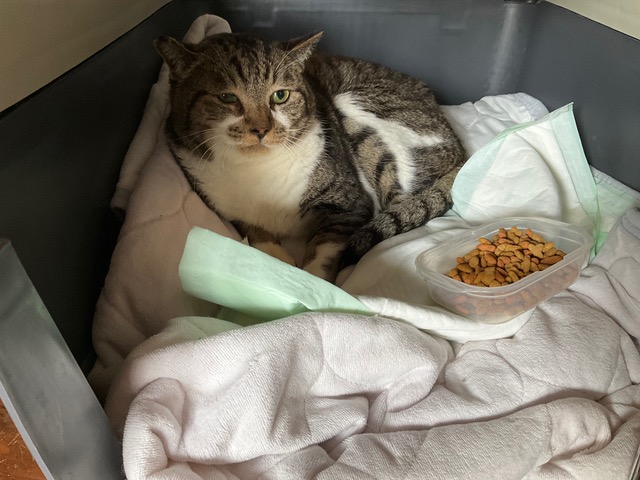
Photo: A cat starts life in a new home.
Right now….
2026 has started well on the rehoming front, with ten animals re-homed in the first two months. TNR has been more complicated, as we are currently dealing with a site where feline leukaemia virus is present, which adds a significant layer of difficulty to operations.
Looking ahead through the rest of the year, a priority is to continue work on the shelter itself. We have already replaced two sections of tsuchi-kabe "mud" wall with plywood, which will allow us to insulate them properly. We are also working on subdividing one large room in the shelter into a number of smaller, dedicated areas: an isolation room with multiple bays, a hospital room, an office, and a kitchen. At present we use the house for some of these functions, which is not ideal.
On the electrical side, we now have a full electrical connection to the shelter. Previously we had only a single 20-amp, 100-volt supply, which was adequate for the basics — cat toilets, lights, and so on — we even managed to run one window-style air-con. The new 40-amp 200V connection means we will be able to run proper air conditioning, which will make a substantial difference to conditions in the shelter through the summer months.
We are also hoping to improve the water distribution in the shelter this year. Essentially, we need a large number of sinks — enough that every cat room has its own water supply, so that water bottles can be filled in the room itself and hands can be washed between rooms without having to go elsewhere. This is not merely a matter of convenience; it directly supports our ability to maintain proper isolation and separation between different areas of the shelter.
In the immediate term, over the next two to three months, we are planning to launch a fundraising appeal to purchase a number of items for the shelter. The cost of bringing the full electrical supply into the shelter is something I have covered personally, but items such as air conditioners, sinks and several internal doors are reasonably something that CATNIP as an organisation should be funding, and we will be appealing to supporters accordingly.
Air conditioning is a particular priority. Japanese summers have become significantly hotter even compared to ten years ago, and there are currently parts of the shelter that simply cannot be used safely during the hottest months. When outside temperatures reach 38 degrees, cooling those areas becomes impossible and we cannot in good conscience house cats in those rooms through the summer. Installing air conditioners in the next two to three months would allow us to develop and use those parts of the shelter throughout the entire year, which would make a considerable difference to our overall capacity.
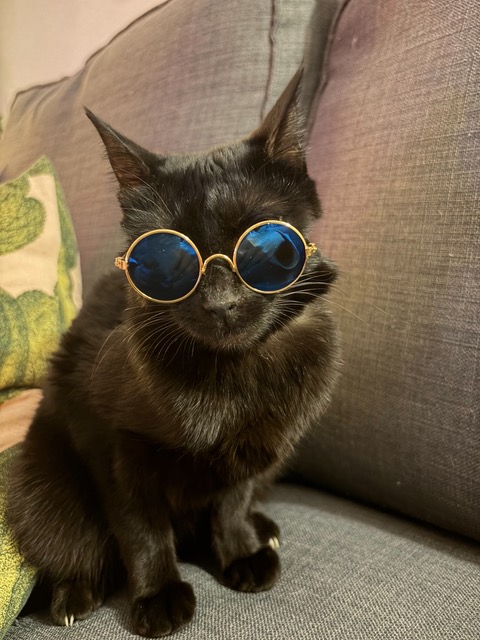
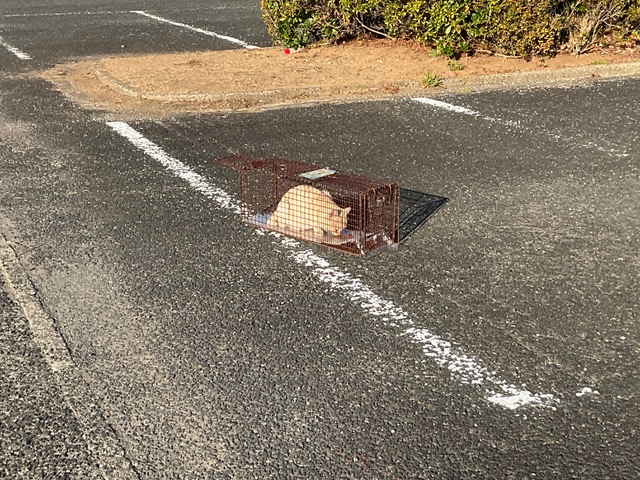
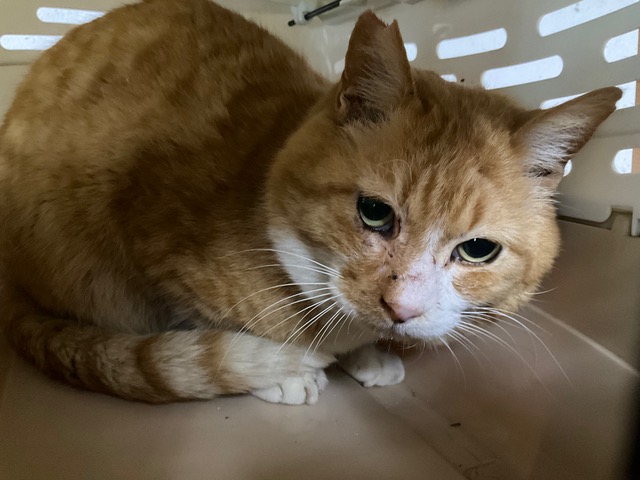
Photo: Rescued from a Car Park
Taking in Injured Cats
One of the policy decisions made last year was that we will always take in an injured cat, whatever its condition. This led to us taking in multiple cats last year that were in pretty appalling states. In one case, the cat had died by morning. In others, the cat was taken to the vet, and it was then the vet's call whether to treat or euthanise. In most cases the vet chose to treat, and outcomes varied — some cats survived, while others, despite ten days of intensive nursing care, did not make it.
The reason for this policy is straightforward: in Fukuoka City, if you see an injured cat and call the authorities, you will in all likelihood be told to call back when the cat is dead. Nobody will come. No one will rescue an injured cat and give it the care it needs. This is, frankly, unconscionable.
I understand why other cat rescue groups might prefer not to get involved in these cases, as the costs can be phenomenal. We are frequently contacted by foreign visitors to the city — people here for conferences or holidays. The reason it tends to be foreigners who reach out is that when they see an injured cat, they expect something to be done. My sense is that many Japanese people are equally distressed, but they don't know who to call, they don't know who will take them seriously, and they don't want to find themselves liable for potentially several hundred thousand yen in veterinary expenses. Very often they are working and live in a small apartment. They don't have the resources. And so they don't call anyone.
I am hoping that will change. As for us - we cannot take in every sick cat, but if a cat has injuries, and it is within our "area", we will try and do something.
The downside of this policy, of course, is that it throws plans into disarray. It is very difficult to make plans for the shelter and then execute them on schedule, simply because at any moment someone may contact us with an injured animal, and everything else has to be set aside while we go out, collect the cat — scraping it up off the tarmac if necessary — get it to a vet, and then potentially care for it through its recovery. This makes planning, and following through on those plans, considerably more difficult. It is also financially challenging.
Nevertheless, it is something I feel strongly that we should be doing.
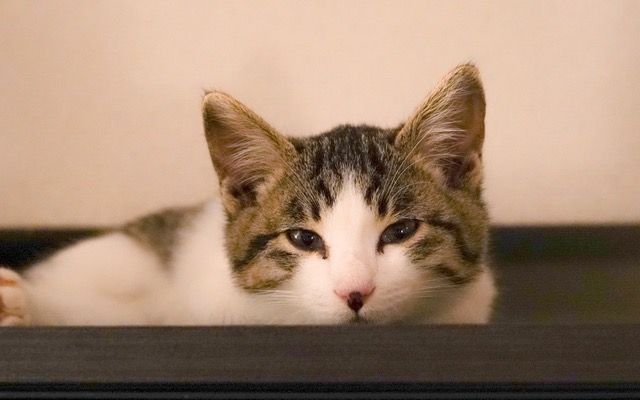
Photo: rescued from a car park under the bridge to Hirado.
Rehoming Cats
In 2025 we rehomed rather fewer cats than I had been hoping - just 23. However, in the first two months of 2026 we have rehomed ten cats, which goes some way to making up for it. I think what happened towards the end of 2025 was that we had a number of cats on long-term adoption trials, and for various reasons those trials had not been finalised into confirmed rehomings. So the 2025 figures were not as strong as I would have liked, but the start of 2026 has been encouraging.
Giving Advice
We continue to give advice to people who contact us through the website. The availability of high-quality automatic translation has proved extremely useful, as it allows us to give more nuanced and considered advice to Japanese-speaking enquirers, rather than being limited by the constraints of straightforward machine translation. The quality and subtlety of the guidance we are able to offer has improved considerably as a result.
In practice, the workflow typically runs as follows: the incoming question is translated by Claude (an LLM), which will often also offer suggestions as to how it might be answered. If it is a complex case, those suggestions can be helpful. I discuss the issue with Claude, and possibly, Midori, and Claude drafts a response, I review and amend that draft as I see fit, and Claude then renders the final version in Japanese for sending back to the enquirer. It is a smooth and efficient process.
I still mostly write English emails for English speakers myself, and English emails often form the basis of the Japanese text I send to vets and volunteers. (That said, this email started life as a series of voice-notes transcribed by Claude.) Since I use Claude for translation, the Japanese output is partially influenced by Claude's "understanding" of the situation in any case, so I don't feel too bad about letting it suggest an initial draft. In all cases, I back-translate the Japanese output in Deepl to check what is being said.
TNR
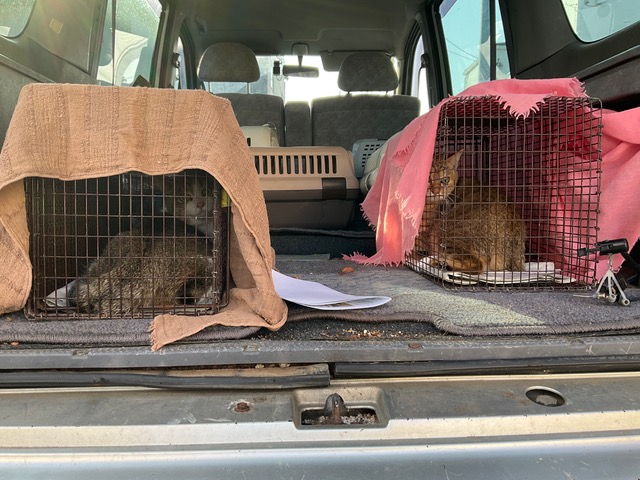
In total we TNR'd approximately 26 to 27 cats, which may be slightly fewer than in some previous years, but TNR is extremely time-consuming. We worked at seven sites, the furthest being Genkai, in Saga Prefecture.
Our policy, as far as possible, is to maintain and take responsibility for the TNR areas we have previously been involved with. So if, for example, an un-spayed female turns up in Chayama, we will be contacted and we aim to act on it as quickly as we can. The intention is to keep on top of the areas we have already worked in, rather than allow the situation to deteriorate after the initial effort.
Project: "Nick is Dead"
As some of you will know, we have an ongoing project called "Nick is Dead" — a contingency plan, as Nick is currently both rude and in good health. The purpose is to ensure that CATNIP can continue to function in the event of my demise.
As part of this, I have increased my life insurance to ¥10,000,000. This will be left to my wife, and is intended for the benefit of the cats of CATNIP. It is not possible for me to make NPO CATNIP the beneficiary. It possibly isn't desirable either, as it might make the NPO attractive to the wrong sort of person. So Midori will distribute the money, as appropriate, at her discretion.
Of course, in itself, money is not enough to ensure CATNIP's continuity - but money is a great enabler, and is one element in CATNIP's long term survival.
Protocols
This isn't directly relevant to members, but I thought it might be interest.
One of the central challenges any shelter faces is identifying sick cats at the earliest possible stage, so that they can be treated or isolated before their condition worsens or spreads to others. We address this through a set of protocols designed to ensure every cat is seen regularly and attentively.
The core protocol is that each cat must be seen by two different people, twice each day — four observations in total per day. Of those, at least two must involve some form of interaction to which the cat responds. This response might be a purr if it is stroked, or it might be a hiss from a corner - the important thing is that someone looks the cat in the eye twice a day. For most cats this is straightforward, but for some of our shyer residents it can require a daily effort simply to locate them, let alone to elicit a response.
We also have protocols relating to the death of cats in our care. CATNIP is frequently in what might be described as a hospice situation — we may know, for example, that a cat we have taken in with deteriorating kidneys probably has around ten months to live, and we commit to seeing that cat through to the end of its life, giving it appropriate food and care, stepping in to provide a peaceful end when the time comes. In other situations, cats are brought to us in such poor condition that they die before we can even get them to a vet. In others still, a cat has been ill for some time, has received veterinary care, but simply does not pull through.
In all of these situations, without exception, we have a strict protocol: we always inform the relevant people that the cat has died. Whether that is a foster carer, a cat feeder, someone who brought the cat to us, or a member of the public who has been following the cat's progress, they are told. We also always inform the vet, regardless of whether the cat was known to the vet, or came to the shelter just a few hours before death. Nobody is left wondering what happened. In many - but not every - case we will also report the death in our FaceBook group.
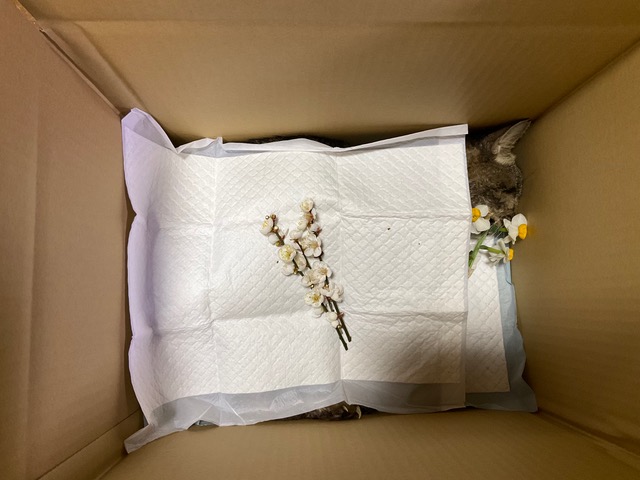
It is also our policy to collect cats that have died at the vet and take them ourselves to the local cat crematorium. We never allow an animal to be disposed of as medical waste. Cats are always taken to the crematorium in a box, with flowers, by me personally. And then we ring our bell.
The one exception to these protocols concerns very young kittens under 21 days old that we are hand-rearing. Sadly, mortality rates among neonatal kittens are very high in the absence of their mother, and it is not uncommon for kittens to die between day 12 and day 19, despite our best efforts. In such cases, we don't always inform the vet, unless the vet has previously interacted with the kittens.
Safeguarding
Safeguarding has become a critical consideration for us. The core concern is this: before we meet someone in person — particularly a young woman — we want to ensure that they already have a means to contact a woman volunteer associated with CATNIP. We sometimes find ourselves meeting people at very short notice in quite remote locations, out in the countryside, with the afternoon drawing on and darkness approaching, and nobody else around. That is not a comfortable situation for a young woman to be meeting someone for the first time, particularly an older man she does not know. We should do what we can to set her mind at rest and make her feel as safe as possible, so we can get on with dealing with the cat.
The way we handle this as follows. When someone contacts us, we ask them to connect with us on LINE. I immediately create a LINE group and add an online chaperone to it. For Japanese-speaking contacts the chaperone is usually Midori, my wife. For non-Japanese contacts it is usually Hui Lin, who is based in Tokyo and is extremely busy with a great deal of other work. I am very grateful to her for everything she does for us. It is a lot of work: currently, we have 139 Line groups - of which 15 or so are active at any one time.
There is a second dimension to this as well. We have to be mindful of situations where someone may be angry with us — for example, where a cat has been euthanised on veterinary advice and the person who brought it to us disagreed with that decision. In their distress and anger, they might feel the urge to lash out and make some kind of allegation of improper behaviour against me. Of course we have to take such allegations seriously. The LINE group arrangement gives us a clear initial response in such cases: the person had the opportunity to be in contact with a woman associated with CATNIP throughout the process, and if anything improper had occurred, she was in a position to report it at the time, rather than raising it only afterwards in the context of an upsetting situation involving the cat.
Other policies: generally speaking, if we are meeting a woman for the first time, we try and do so in a well-lit area, where other people are present. Unless it is necessary, we do not ask for people's address before first meeting, instead we meet them at a convenience store and then go to their apartment.
We do not, as a rule, use body-cams. I am not sure they are legal to use in public in Japan. Reasonably enough, old men with cameras filming young women tend to be viewed with a degree of suspicion. In people's rooms they would be a major privacy breech. I would generally consider using them only if I had a specific reason to believe they were necessary.
So - those are our basic safeguarding protocols. They are designed to protect the people we deal with, and CATNIP's reputation.
"Safeguarding", however, can be understood in a much wider sense, and that wider sense matters enormously. I am very frequently in situations where I need to find words of comfort for people going through something deeply distressing involving a cat. It might be a cat feeder who has watched a cat they have been caring for slowly decline because its mouth is in too poor a condition to eat, and then the cat dies. It might be someone who scraped an injured cat up off the road, spent an entire night trying to comfort it, and contacts us in the morning in a state of considerable distress. We are dealing with a situation at the moment involving someone who has been caring for a TNR cat with partial paralysis — a sensitive matter I won't go into in detail here, but one where this wider sense of safeguarding is very relevant.
Safeguarding is not only about protecting people's physical safety or shielding the organisation from allegations. It is also about their emotional and psychological well-being. CATNIP's policy is that the cats come first, but we should always be conscious of the depth of emotional attachment that people form with the animals we are caring for, TNR-ing, or rehoming. We have a responsibility to acknowledge that and to respond to it with appropriate sensitivity.
Safeguarding, in that fuller sense, is something I consider to be a core part of what we do.
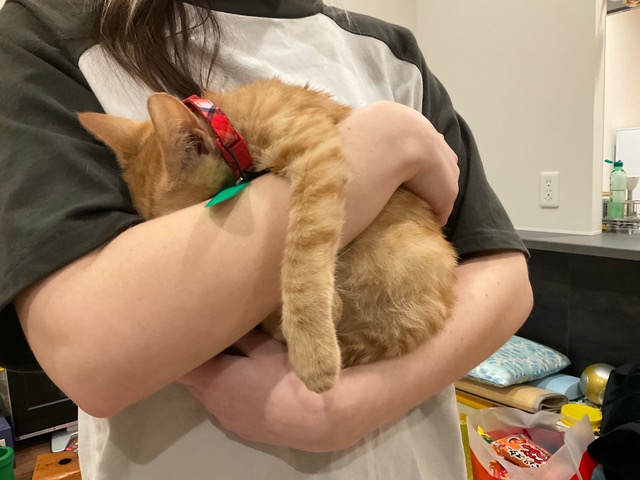
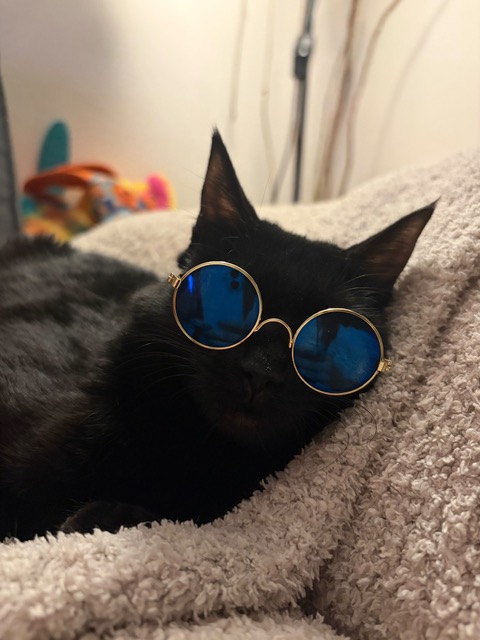
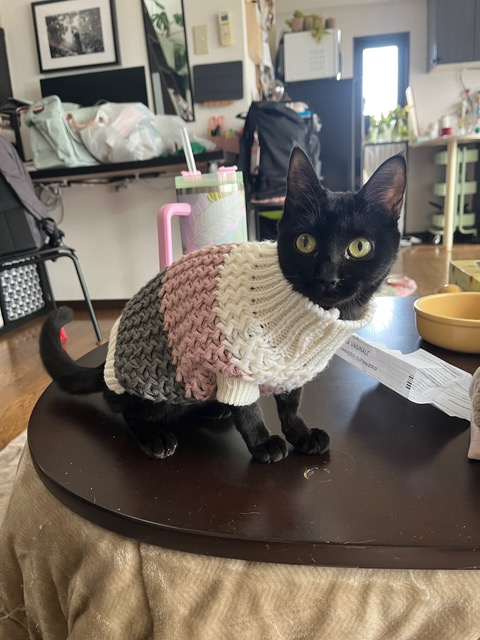
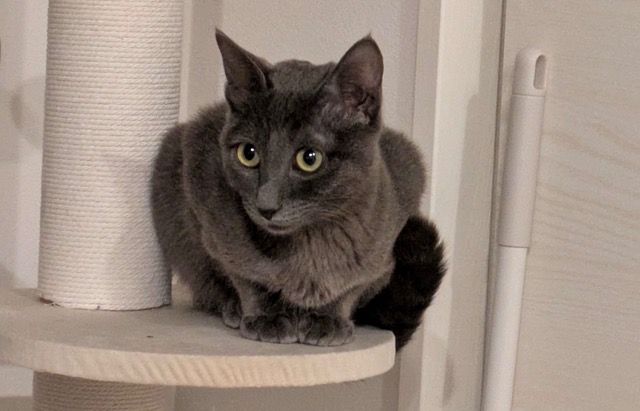
Photo: Safeguard me! Now!
Using LLMs (AI) Like Claude
We are starting to use Claude quite a lot in our daily work. One thing it helps us with is translation. We can translate text into Japanese in a very sensitive and context-appropriate way — suitable for communicating with vets, or for use on the LINE app and in various other settings.
One of the benefits of working this way is that Claude ends up knowing quite a lot about CATNIP, and is therefore able to give sensible and informed advice when we are going about our work.
For example, we are currently conducting TNR at a site where we have discovered feline leukaemia virus (FeLV). As a test, this situation was discussed with Claude, and the level of understanding shown was impressive and genuinely helpful. This was not limited to detailed information about different types of FeLV tests and when they should be carried out, but extended to a broader understanding of how we need to manage the relationship with the cat feeders involved at the site, who are naturally distressed. In this case, it did not tell me anything I didn't know, but its responses gave me confidence in using it in this way. It is becoming a very useful tool.
An area where we plan to make much greater use of Claude in the coming year is accounting. In future, it will simply be a matter of photographing receipts — from the vet, from shops, or wherever — and Claude will process them and update a spreadsheet accordingly. Where there are associated transportation costs, such as when travelling to the vet, these will be handled automatically. The hope is that this will significantly reduce the amount of manual work involved in getting the accounts in order each January and February.
A further goal is to give Claude direct access to the CATNIP cat database, making it possible to simply ask questions - much as one might ask a voice assistant - about any cat. Questions such as when a vaccination is due, what medical history a cat has, or any other detail held in the database could be answered instantly. I would also like to be able to update cat records verbally - to add a record that a cat was given a worm treatment for example. This would effectively provide a knowledgeable, low-cost assistant available at any time, and would be an enormously useful addition to our day-to-day work.
Looking further ahead, my medium term ambition is to have an LLM monitoring the video feeds from the shelter. We currently have 16 cameras, all displayed on a large television in the lounge, which is kept on more or less permanently. (I am expecting to boost this to about 32 cameras overall.) These cameras let us see every cat room, and can be viewed from anywhere in the world. One of their main uses is monitoring the cat toilets, as early detection of conditions such as bladder problems and struvite crystals is important. At present this relies on human observation, but the long-term goal is to have an LLM tracking each individual cat's toilet use and general activity levels, and automatically flagging any cause for concern. This would serve as an additional early-warning mechanism, helping us to identify and isolate sick cats at the earliest possible stage.
The accounts
I have attached the "short" form of the accounts. One document is the definitive version - it is in Japanese. The other is a translation into English created by Claude - it is not definitive and may be incorrect in detail, but it is easier to handle for English speakers. In essence, outgoings were 3.6million yen, income was 3.2 million yen, and the total debt increased to 1.5million yen. However - this debt is to Nick and Midori. The only other debt CATNIP has is short term debt to one vet, as I pay the bill monthly.
As you can see, vet costs came in at about 1.8million yen a year.
CATNIP_Financial_Statements_2025_EN.pdf
NPO法人 Companion Animal Trust, Nippon-2025年12月-決算書(20260218).pdf
Transportation costs are 137,377 yen this year. All expenses claims for transportation are tied to either
1: a specific invoice detailing cat care, in the case of vets,
2: a rehoming event, at a specified address, for which we have documentation, or
3: a TNR event, for a specified cat, for which we usually have release videos.
Transportation expenses are billed at 14yen/km.
The other big thing in the accounts is "animal consumables and food". This came to 1.55 million yen. The largest expenses here are for food and toilets.
Toilets:
350kg/month of cat sand
250kg/month of wood pellets
…. making about 7.2 tonnes / year.
Food:
7kg of dry food/day
210kg/month.
2.5 tonnes of basic dry food a year
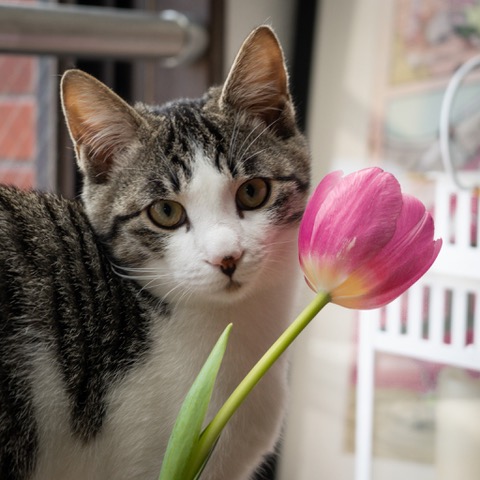
Photo: Pooey? Moi?
Thank you
Thank you for being a member, supporter, volunteer or donor to NPO CATNIP. I am grateful for your support in the coming year.
Appeal
To end, I will outline some of the items I plan to launch an appeal for.
We need at least one, but ideally three, air-conditioners. The three together will probably cost 300,000 to 350,000 yen in total.
We need 5 glass doors, as we are partitioning rooms. These will probably cost 120,000yen for all 5.
We need 4 hand-washing sinks (probably 10,000yen each - 40,000yen in total), and 4 larger sinks (50,000yen total, if bought second hand.)
A total of 500,000 to 550,000yen. (About 2600 Pounds Sterling, or 3500 US Dollars.)
However, if we could raise half of that, we could get the basics in place.
Thank you for reading this far!
Kind regards
NPO CATNIP
Nick May
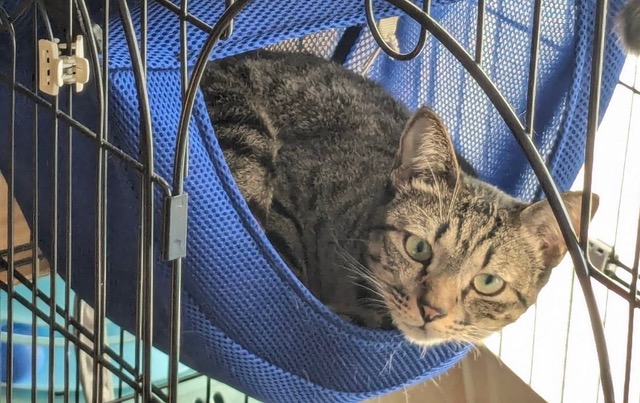
Photo: This is Toffee - the partially paralysed cat we have just taken in.